

From Ranking to Recommendations: The AI Search Revolution Explained
By Drishya | AI Content Specialist
Published on February 20, 2026 | 5 min read
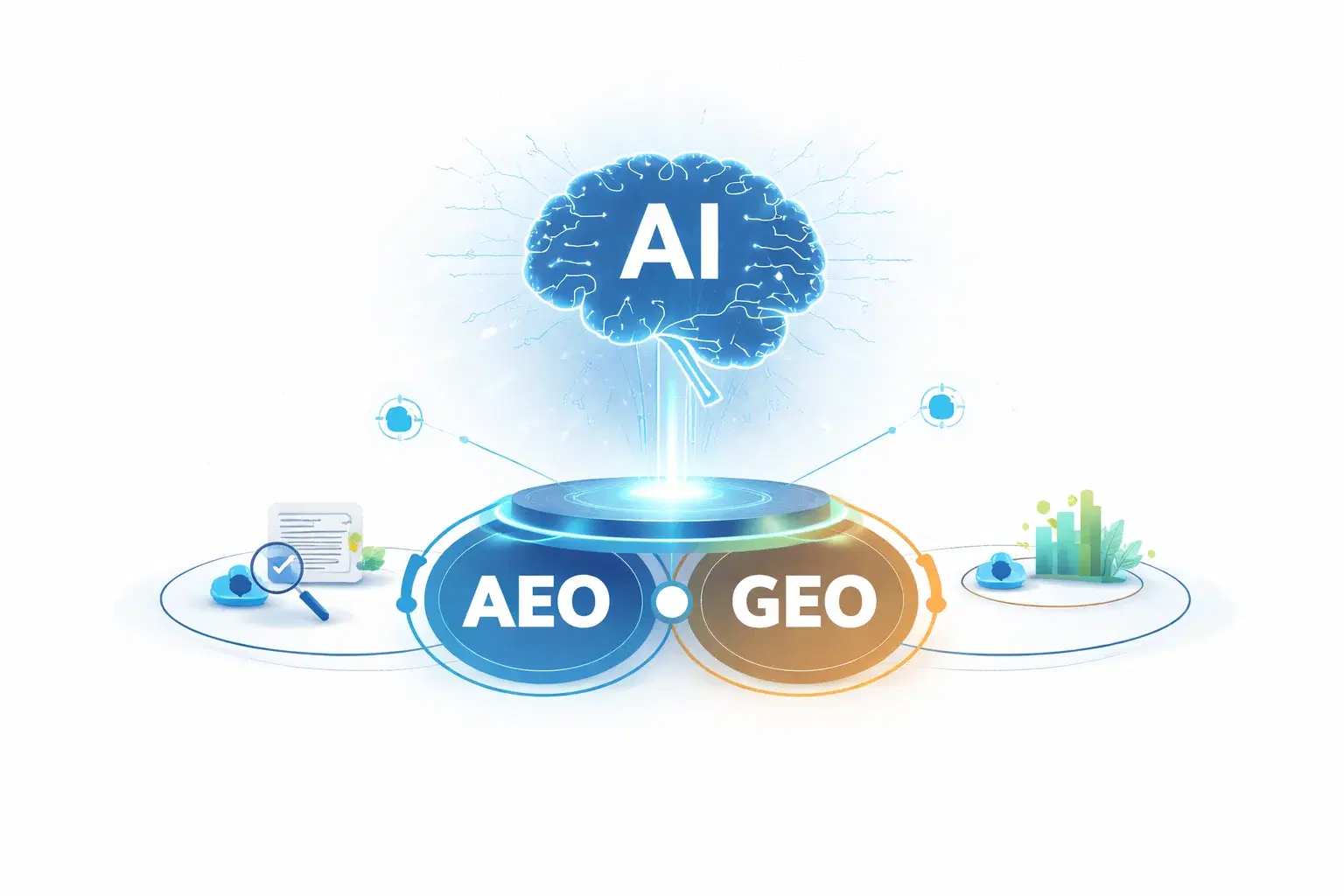
In the context of modern search, recommendations matter more than anything. Today’s AI-powered search engine platforms transform the discovery of user search. The AI-powered search platforms of ChatGPT, Google Gemini, and Perplexity generate direct answers to users, recommend brands, tools, and valuable services.
But the major point is, how do AI search engines decide brand recommendations? It is critical to understand the significance of being competitive in the AI Search Visibility and to enhance the overall digital presence of companies.
In this blog, we are breaking down how AI recommendation systems of ChatGPT, Google Gemini, and Perplexity work and how Generative Engine Optimisation and Answer Engine Optimisation are shaping the AI search revolution.
What is the Shift from Search Rankings to AI Recommendations
There is a strategic shift in the search engine systems, because users are not just looking for information, but rather they want information that is deep in knowledge.
Users’ queries involve the demands for conversation-level answers. With the help of AI search engines, they summarise these inquiries and offer faster decisions and greater trust in AI-generated answers.
If we look into the traditional search features, it is visible how the shift emerged:
The focus of traditional SEO was on:
Ranking and building traffic growth
Keyword optimisation and improvements
But the focus of AI-powered search engines is on:
Building brand trust
Delivering content clarity
Offering contextual depth and multi-platform presence
These components highlight the significance of AEO and GEO, which work together to enhance the overlap of digital precision of brands in AI recommendations.
How AI-Powered Search Engines Work
AI search engines and optimisation are transforming towards user-intent search. The accurate synthesis of information and evaluation of trust signals work together to deliver brand recommendations.
Let’s look into how AI-powered search engines decide which brands to recommend:

1.Priority in Authority
The significance of AI-powered search engines heavily prioritises authority over keyword density. For example, when a user asks questions like what are the best digital transformation companies, AI systems analyse the inquiry authority and context.
The process is equipped with brand mentions across authoritative websites, reviews or sentimental signals in platforms, industry relevance, expertise, and third-party validation. When a brand is consistently cited across platforms, brand authority becomes credible for AI systems to prioritise.
3. Contextual Relevance
The significant component of AI search engines is contextual relevance. For a better AI search visibility, contextual relevance becomes a strategic priority.
Through clear positioning, the delivery of structured data clarity, semantic relevance, and conversational content architecture boosts search visibility in the AI-powered search engines.
4. AEO & Structured Content
Structured information of brands improves machine understanding in accuracy and clarity. Through structured data and content, AI search engines process accurately. This applies to the relevance of AEO as it ensures brand content is formatted and structured for AI systems to extract and synthesise reality.
With structured information, such as the FAQ scheme, clear service pages, data-rich blog content, author credibility signals, and consistent terminology, it makes it an easier path for AI systems to understand and take the brands into recommendations.
5. GEO Influence
Generative Engine Optimisation of GEO is the new SEO, because its focus influences how generative AI models interpret brands. In the occupancy of AI search, what is spoken in the AI systems matters more than ranking keywords.
The GEO optimisation world, as it enhances brand mention probability, comparative positioning, sentiment framing, and inclusion in AI-generated responses, which build brand awareness and in credibility.
6. Conversational Signals
The value of backlinks is now transformed into the efficiency of conversion signals, which builds subject-matter authority in high-quality.
AI systems evaluate conversational relevance of brands by the consistency of brand reference in context, citation in Q&A forums, thought leader mention of brand, and mentioning or discussion in comparison articles. These patterns of association are studied by AI models, and the right contextual relevance makes brand recommendations in AI search engines.
AI-powered search engines like ChatGPT, Gemini, and Perplexity work in accordance with these components. In this context, AI recommendation success of a brand is therefore constituted by the following ideas:
Authority amplification with insight-rich content publication
Semantic depth that builds topic clusters for subject mastery
Multi-platform presence to ensure brand mentioning
Conversational optimisation, which answers real user queries
Structured data strategy that enables easy machine readability
These core features are embedded with AI-powered search engine models and, through the combined work of AEO and GEO, transform AI-powered search and recommendation of brands into a scalable and valuable condition.
The Adviciya Effect in AI-Powered Search and Brand Visibility
AI-powered search engines are evolving rapidly, and the right digital strategy and service advance business transformation. Adiviciya ensures brand visibility, credibility, and quality in the AI search through the right integration strategies.
Here’s how Adviciya helps brands to win the AI-powered search:

1. Audits & Evaluation
The quality-driven and right evaluation for AI search visibility audits enriches brand presence online. The evaluation and auditing of brand presence across AI systems, probability of brand mention in generative engines, content structure readiness, and authority distribution across digital channels advances a clear roadmap for AI inclusion.
2. AEO Framework
The right AEO framework with content building increases the likelihood for platforms like ChatGPT, Gemini, and Perplexity. The content building is equipped with an FAQ-driven format, intent alignment, schema optimisation, and structured components for AI extraction. This AEO framework synthesises and advances the reference of the brand.
3. GEO Strategy
The focused delivery of the GEO strategy ensures brand framing in accuracy within the AI-generated outputs. Through the GEO strategy of topic authority mapping, competitive mention analysis, sentiment enhancement, and brand positioning with the industry conversation ensures brand visibility.
4. Trust Signal Expansion
AI systems evaluate the scalability of brand trust, and Adviciya strengthens it by delivering digital PR, expert content positioning, industry collaborations, and review signals. These multiple contextual authorities are AI recommendation systems.
5. Continuous Monitoring
Continuous tracking support of Adviciya ensures AI adaptation in quality. Through monitoring of AI response patterns, brand mention trends, competitive shifts and generative model updates, AI search adaptation becomes easy.
The shift from traditional search engines to the future of search has integrated recommendations and answer-driven search. The occupancy of AI-powered search engines is accelerating, and users are using ChatGPT, Google Gemini, and Perplexity for finding trustworthy brands. For better AI visibility, AEO, GEO, and AI Search Visibility understand brand voice better and keep a digital presence in high quality.
Connect with Adviciya and future-proof your brand in the AI search.
FAQs
What is an AI-powered search engine?
An AI-powered search engine refers to a search engine which uses large language models to deliver direct answers to queries, instead of giving out links.
What is the difference between AEO and GEO?
AEO refers to the process of structuring content for AI systems to easily extract and synthesise to deliver direct answers. On the other hand, GEO focuses on increasing the likelihood that generative AI models recommend brands to user queries.
How does Adviciya help to improve AI search visibility?
Adviciya offers structured content strategies, authority-building campaigns, and AEO and GEO frameworks that help to improve AI search visibility.