

How Website Speed Impacts SEO, User Experience, & Business Revenue
By Drishya | AI Content Specialist
Published on June 1, 2026 | 5 min read
Imagine this: you invented brilliantly in a beautiful design with on-point design, sharper copy, and a genuinely great product display. But the only problem is that visitors are leaving in seconds, Google rankings keep slipping, and conversions are not happening as they should be.
So what is the issue here? It's definitely your website speed!
Website speed matters significantly for securing impactful SEO, user experience, and business revenue because it's the most underestimated variable in digital growth. For SEO-focused businesses and eCommerce owners, every second of your page matters, and for an impactful advantage for your brand, the right web development services are important.
Through a professional web development company, your ranking on Google and user experience become highly valid with credibility, and through website speed optimisation, it will be delivered accurately. Now, let’s break down exactly how website speed impacts SEO, user experience, and revenue boosts of your business.
Understanding the Speed-SEO Connection
Search engines are not just reading your content, but rather they experience how your content is delivered. Google uses your website page speed as a ranking signal, and in practice a slow website will not send active signals for ranking.
When high bounce rates happen due to slow loads, tell Google that visitors aren’t finding your website signals. Reduction in crawling leads to Google bots spending more time waiting for your pages to load, which leads to less indexing of the pages. This damages your visibility and Google ranking in search results.

As SEO and website speed are connected together, let’s break down how slow websites impact Google ranking, user experience, and business revenue.
Google Ranking: How Speed Affects Performance
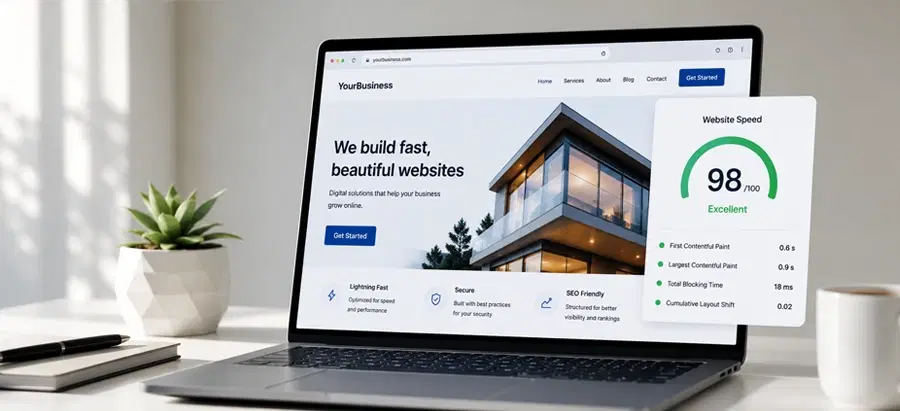
Speed metrics decide your website ranking, and Google’s Core Web Vitals significantly influence how your site ranks. Understanding the Core Web Vitals is essential for a business that is serious about attaining growth.

Each of these vitals is a signal that Google uses to identify whether your site deserves to rank. Through a professional website development company, the right auditing and optimisation is delivered to enhance your business growth and engagement.
User Experience: How Slow Websites Directly Hit
Website speed is directly associated with user experience, and a slow site actively misses the relationship between your brand and your audience. Here are 4 factors of how a slow website directly hurt user experience:
Immediate bounce rate spike: Studies have showcased that a page load time that crosses 3 seconds causes users to leave the website without engaging. For eCommerce owners, additional load time leading to potential customers leaving before they see the product is a huge loss.
Mobile users are less forgiving: In today’s digital landscape, mobile users represent the majority of web traffic. When your site lacks potential responsive website development services and speed optimisation, mobile visitors will leave a worse impression and experience than desktop users.
Engagement drops across the board: When users don’t stay on the website, every social share, return visits, product exploration, and revenue metric suffers at the same time. When load time is under 2 seconds, users stay for a longer time, but if the loading is over 5 seconds, the bounce rate becomes very high.
Brand perception: slow websites deliver untrustworthiness to the audience, and studies showed that users conclude the page speed is professionalism. In this content, if your site lags, visitors question whether your business is credible even when your product is excellent.
The Revenue Impact: What Slow Speed is Costing You
Website optimisation is directly connected to revenue generation, and a consistent lag of website speed only leads to potential lost revenue.

A fast-loading site drives the generation of customer trust, reduces cart abandonment, and allows users to complete their action, which makes a huge impact on the growth of revenue.
The 6 Factors That Slow Your Website Down
Unoptimised and uncompressed images slow load times.
No browser caching leads to downloading from scratch on every page.
Bloated codes (unused CSS, JavaScript, and HTML) add unnecessary file size.
Excessive redirects add latency.
Uncompressed files reduce the file size and cut the transfer time.
What to Do to Measure Your Website Speed
Google PageSpeed Insights: It is best for SEO-aligned performance audits.
GTmetrix: For detailed waterfall analysis
Pingdom: For setting speed monitoring and uptime
Adviciya Insight: How Your Website Shifts into the Right Speed
Website speed is the foundation of every project, and at Adviciya, right web development services are secured with performance as the core value of thought. Through responsive web development services, your website performance becomes solved and leads to credible growth measures. Because speed is an advantage for better ranking, user experience, and potential revenue growth.
Talk to the Adviciya team and build a website that works as hard as you do.
FAQs
How does my website speed affect Google ranking?
Google uses page speed as a direct ranking signal through the Core web Vitals framework. A slow website delivers a high bounce rate, which leads to a negative impact on your website.
What is a good website load time for SEO?
The good lead time of a website for SEO is under 2 seconds because a load time above 3 to 5 seconds leads to a high bounce rate and negatively affects to Google’s ranking.
Why do Core Web Vitals matter?
The Core Web Vitals are measurable UX metrics that are used as ranking factors of your website.