

Mobile App Development Services: What to Expect from Planning to Launch
By Drishya | AI Content Specialist
Published on July 20, 2026 | 5 min read
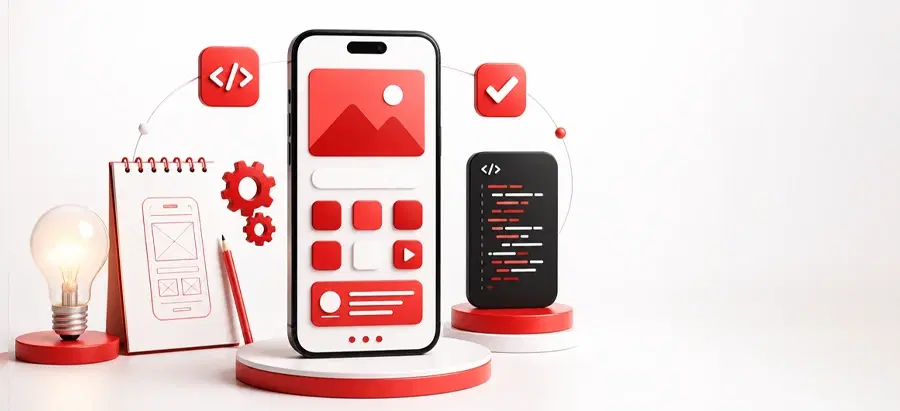
If you are a social media business or startup owner or a product manager, you probably have thought of building a mobile app for your brand. Along the way, you must have realised that a mobile application is not just a code but a product journey.
The overall process strategy, design, development, testing, and launch. Each of these stages requires a credible mobile app development company and services. Because they don’t just write code but guide you through accurate decisions. This includes custom mobile app development services that are built from the ground up with strategy and testing that gets you onto both Android and iOS.
Right mobile app development services help you set realistic expectations and avoid common pitfalls or mistakes that affect the overall performance of the mobile app. In this blog, we are breaking down the major components of cross-platform mobile app development that actually works better.
Why Planning Comes First Before Code
First-time business founders jump straight into development, but the thing is, planning is what makes accuracy at the end of the results. That is why a clear understanding and planning before starting the app development makes quality-driven progress in the performance of the mobile app after its launch.
Here’s what proper planning before coding looks like:
1. Understanding the Purpose and Audience
This phase is where a clear understanding of the brand audience and purpose is defined, and it includes who this app is for and what problem it solves for them.
2. Setting the Platform Choice
Having a clear strategy on the platform choice matters more than ever. By understanding the audience, building apps for Android and iOS separately or going with cross-platform development is important to look into. This decision affects the overall cost, timeline, and app performance on different devices.
3. Native vs. Hybrid Approach
Planning before coding addresses how native and hybrid apps work. Native apps perform and give access to features smoothly, and in the case of hybrid (cross-platform) shared codebases, they will be there, which helps to save time and cost.
4. Identifying Scope and MVP
Most successful apps launch as an MVP first and then later expand into real user feedback. This process ensures whether the smallest version of the app can deliver real value properly, which reduces chances for low-quality performance.
5. Ensuring Budget and Timeline
Realistic measurement of app performance, complexity level, features, and platform coverage will be studied thoroughly. This makes the result of the app credible and quality-driven.

Design, Development, Testing: Where the App Takes Shape
Proper planning builds a secured groundwork for mobile app development. After this segment, the real building begins and shapes the overall efficiency of the final product.
Here are the few things that shape the outcome of the designing, developing, and testing stages:
1. Design
User experience comes first because most users expect to have fewer taps without any confusion or excessive typing. A mobile interface has to be simple and more focused, because attention and scene space are limited. In this context, design should be deliberate and simpler to deliver a better user experience.
2. Development
Backend and cloud integration matters more because if your app needs heavy processes, like AI recommendations or real-time chat systems, shifting to cloud-based services is a smarter choice. This smarter shift and choice in the development keeps the app performance fast and lightweight for the user.
3. Testing
Testing is not optional, and every app needs to be tested across different device types and screen sizes to ensure the credibility of the operating system. In this context, having a testing phase before the launch is important because both Android and iOS behave differently.
These three phases build a secured and high-quality app. At the same time, it is important to check the app store requirements before planning too. Because both Android and iOS have different developer programs, guidelines, and factors. By identifying these requirements, last-minute launch delays will be reduced.
A Quick Look: Native vs. Cross-Platform App Development

The right choice is dependent on how you choose mobile app development services that connect with your brand goals, budget, and strategic structuring of the process.
Adviciya Solutions: Bringing Smarter App Development
Building a mobile in today’s powerful digital landscape is about bringing AI optimisation and quality-driven performance together. The success of mobile app development is therefore secured with making accurate decisions, from platform choice to backend architecture. This keeps your business goals efficient and technical health steady.
As a mobile app development company, Adviciya Solutions works closely with each business and brings the brand objective and goals into the planning to make sure the design and development of the mobile app is credible and accurate. With advanced planning, design, development, testing, and launch, Adviciya Solutions brings smarter output that secures better user experience and performance.
Get in touch with Adviciya Solutions and build a mobile app that speaks your brand voice
FAQs
What is the approximate time to develop a mobile app?
The process depends on the complexity level. A simple MVP may take 8-12 weeks, and the final product with all features may take several months.
Do I need separate apps for Android and iOS?
Not necessarily, because with cross-platform frameworks, you can launch on both Android and iOS platforms in a single codebase.
What does a mobile app development company handle in the process?
A credible mobile app development company will deliver a full-scale service that includes design, platform choice, and design complexity. This delivers a better outcome to the app’s performance and quality.